

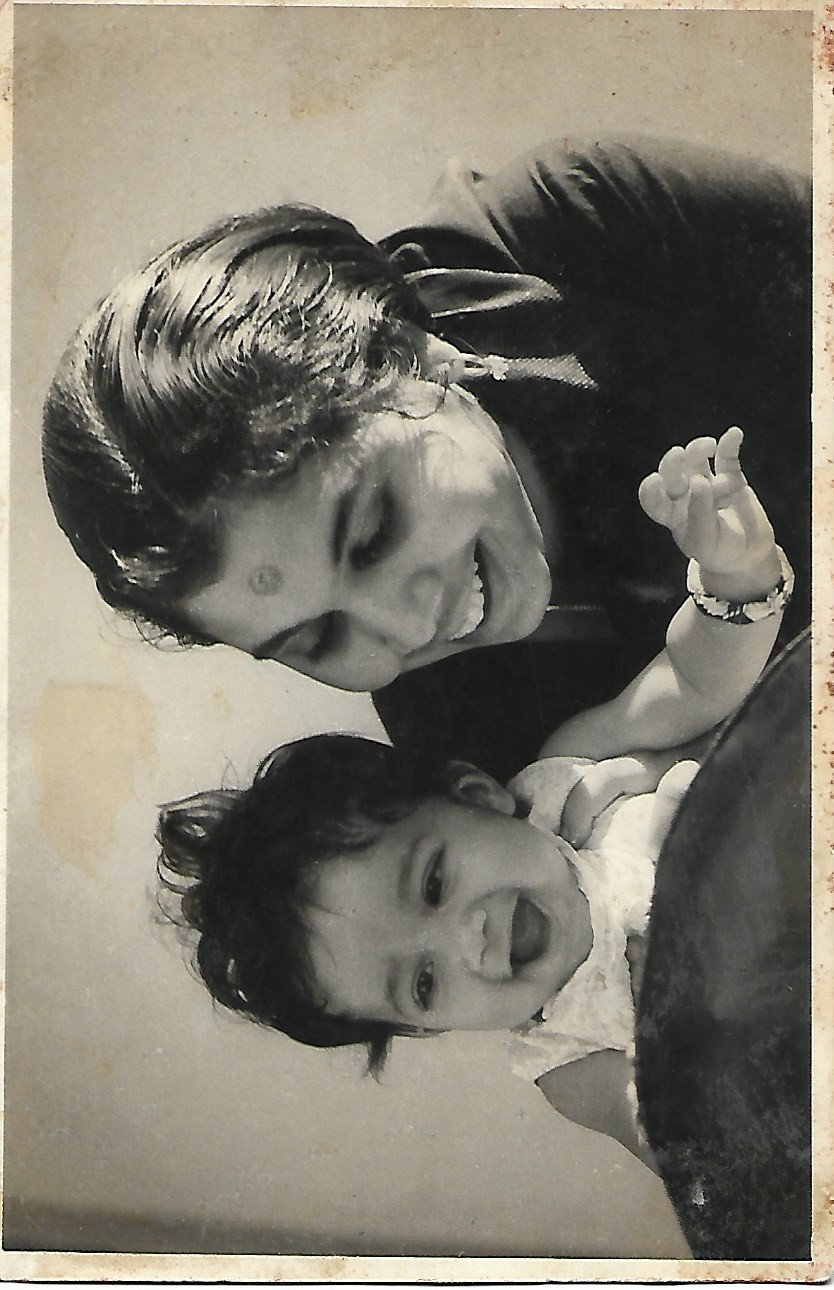
My mother and I were, in many ways, exact opposites.
She was fearless in a way that astonished me. A true Leo, she never softened an opinion for
the sake of comfort, nor did she ever measure her words against possible consequences. Even
in her final years, dependent on a walker and the steadying hand of a caregiver, she remained
entirely herself. She could scold the very person whose arm she held, fully aware that a
moment of irritation might leave her unsupported. Dependence may have altered her
circumstances, but never altered her nature. Nor did age soften her standards. She remained a
demanding employer, direct and unsparing when work fell short of expectations. Yet those
who worked for her stayed extremely loyal, serving her for several decades. They understood
that beneath her tough exterior there was a woman of uncommon generosity who gave food,
clothing, and financial help without a second thought. She may have had little patience for
excuses, but endless compassion for genuine need.
Hospitality was woven into the fabric of her everyday life. Although she was a busy state
government official with countless demands on her time, there was a standing instruction in
our home that anyone present at mealtime was to be fed. Our house was constantly bustling
with the friends of me and my three sisters, relatives visiting my grandfather, and an ever-
changing stream of guests. My cook, Lakshmi, often grumbled about how many people
appeared at the table unannounced but smiled once they all voiced their appreciation for her
delectable meals. Decades later, people still speak of the warmth and generosity of my
mother, recalling that no one was made to feel like an intruder and no one left the table
hungry.
She was a dominant presence long before she became a celebrated writer, and she remained
one until the very end.
As a child, I accompanied her to literary gatherings and public functions. At that time, it felt
less like an education and more like an obligation for me. Yet those journeys were my
apprenticeship. Though convent-educated and more at home in English, my relationship with
Telugu was forged in those auditoriums and halls where endless meetings and conversations
revolved around literature, poetry, theatre, and social issues. The irony is not lost on me.
Much of what I know about Telugu literature came from following her around.
As a child, I sat in the audience and watched her on stage, and as our roles were reversed in
later years, she was among the audience at my book launches and other events, celebrating
my achievements with unconcealed joy. On many occasions, she told my younger son, Ajay,
that I was her “guru” because I could write both in English and Telugu. Such unconditional
appreciation only she could give, and now it is gone forever.
Our temperaments differed sharply. When she was annoyed with me, she would often dismiss
me with a phrase that invariably included my father and me in the same category: “You
intellectuals.” The words were spoken in irritation. Yet beneath them lay an
acknowledgement that my father and I inhabited a world different from hers—a world of
analysis, reflection, and abstraction. She, on the other hand, was instinctive, immediate, and
unapologetically direct.
After my father died twenty-three years ago, she remained the dominant creative force in my
life. We disagreed, we argued, and we approached the world from different angles. Yet her
presence was so constant that it became part of the architecture of my existence.
She lived as she wrote—without caution, without calculation, and without much concern
about tomorrow. Money came and went. Friendships came and went. Recognition came and
went. What remained constant was her determination to live on her own terms.
In the last months of her life, she lived with me. That fact carries a weight I did not fully
understand while living it. When failing eyesight made reading difficult and diminishing
hearing took television away from her, we discovered a new ritual.
Almost every evening, we played cards. “Let us begin our club,” she would announce with
mock solemnity. The games were rarely just about cards. They were conversations disguised
as competition, excuses for banter, and opportunities to laugh at ourselves and at each other.
Whenever I picked up my cards, she would say, “I suppose you got many jokers.”
I always had a ready reply: “I already have all the jokers in my life.”
The joke never seemed to grow old.
Looking back, I realize that the cards were merely an accompaniment. What I looked forward
to was her company, her laughter, and the familiar rhythm of our exchanges. She even ganged
up with my sons to tease me. Those evenings seemed ordinary then; now they shine in
memory with a significance I could not fully appreciate at the time.
Another enduring memory takes me back to the summers of childhood. When green mangoes
flooded the markets, it ushered in the season for preparing the famed avakaya pickle of the
Telugu people. We children were enlisted in the proceedings, peeling mangoes for a pickle
variety called “maagaya” and wiping cut mango pieces dry for avakaya, armed with a fresh
new cloth for the task. The chilli powder back then was pounded at home and mixed with
turmeric, mustard powder, and oil. The mixing was done with meticulous care, and the
colour, aroma, and consistency were examined again and again, almost like an artist admiring
his work and adding final touches to achieve the lip-smacking taste. Pickle-tasting was a
ritual in itself, eagerly anticipated once the work was done.
As my mother grew older, I gradually took over the task of mixing the pickle—a
responsibility that had long been her exclusive domain and one that she relinquished
reluctantly. This year too, I mixed the avakaya while she watched and constantly instructed
me on what I should do. When it was ready, she tasted it with relish and declared with
satisfaction that the pickle would see us through the year.
A week later, she was gone.
People speak of grief as sadness. But it is also acoustical. It is the sudden disappearance of a
sound that has become part of the fabric of one’s life. There is a deafening silence now, but
her voice still echoes.